
Bean-to-cup coffee machine vs capsules: what actually changes?
Thinking of switching from capsules to a bean-to-cup machine? Angelo’s De’Longhi Rivelia review looks at convenience, bean choice, milk drinks, cleaning and the trade-offs.

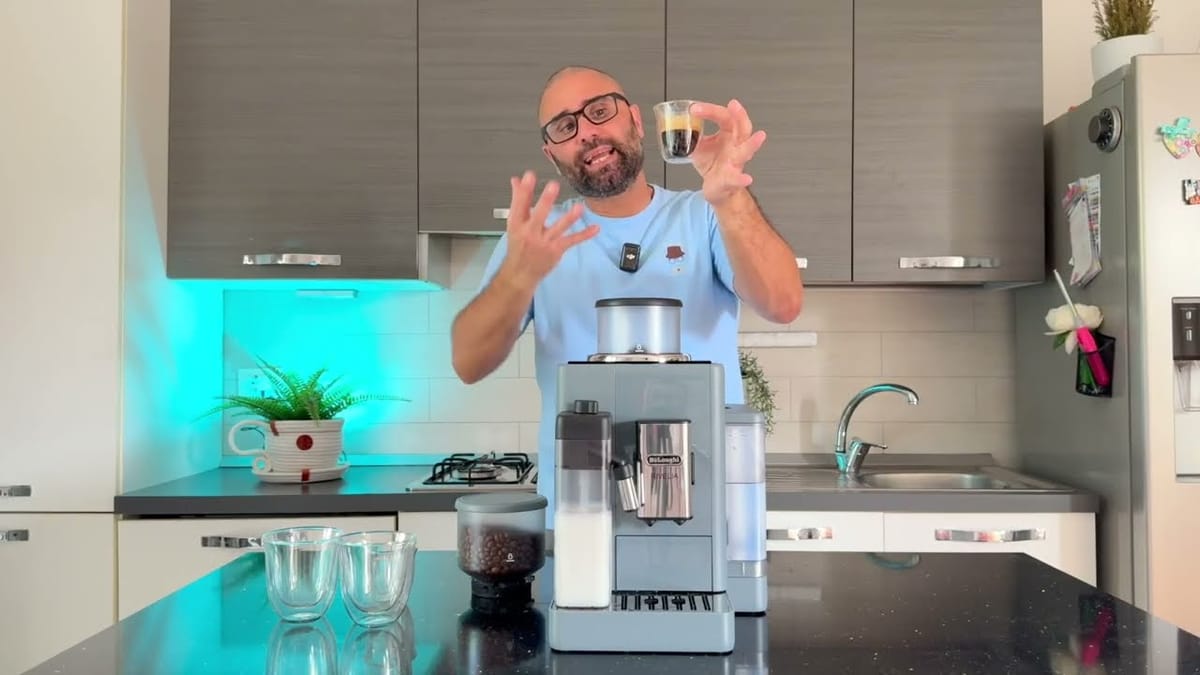
The De’Longhi Rivelia review shows what changes when you swap capsules for whole beans: more choice and freshly ground coffee, but also extra settings and cleaning. It suits people who value convenience and variety more than hands-on control over every espresso variable.
In a video review, Angelo shares his experience with the De’Longhi Rivelia after several months of occasional use. The machine was a gift, and the review was not sponsored. The video is in Italian. To enable English subtitles, open YouTube’s CC settings, choose Subtitles, then Auto-translate and English.
From whole beans to a cup: what changes?
A bean-to-cup machine grinds coffee and makes a drink at the press of a button. That is a different kind of convenience from capsules: instead of loading a ready-made pod, you choose the beans, adjust the recipe and take care of the machine. It is not an automatic upgrade in taste. It is more choice paired with a different routine.
The Rivelia Angelo tested has two bean containers, so different coffees can be kept ready. To switch coffees, you can remove a container and run the grind-and-empty function to clear some of the previous coffee from the grinder. That can be handy if you rotate beans, but it is an extra step compared with using a capsule.
Adjusting espresso without getting lost in the menu
The machine offers user profiles that store different preferences, making it easier for several people to call up their own recipe. You can change intensity, which the machine uses as a reference for the dose, and the drink length. It does not show the actual coffee dose in grams, so it offers less control than a manual setup if you want to adjust every variable.
Angelo likes how the menu guides users through the process and makes it simple to choose a drink. He also points out a limitation: the coffee-profile feature saves the settings you enter, but does not tell you how to correct them when the cup tastes wrong. The grinder has set adjustment steps too, rather than the continuous control more demanding coffee enthusiasts may want.
His opinion of the espresso also depends on the beans. With a commercial blend, he finds the cup pleasant, with body and sweetness. With specialty coffee, he values the convenience but does not get all the complexity he is looking for. That is his experience in this review, not a promise about every coffee or recipe.
Milk drinks are convenient, but they need attention
The milk carafe makes guided milk drinks straightforward. Angelo demonstrates a cappuccino-style drink: the machine makes the coffee first, then adds milk, and you can stop the flow when the cup is full enough. The range of recipes and saved profiles makes it easy to match drinks to different household preferences.
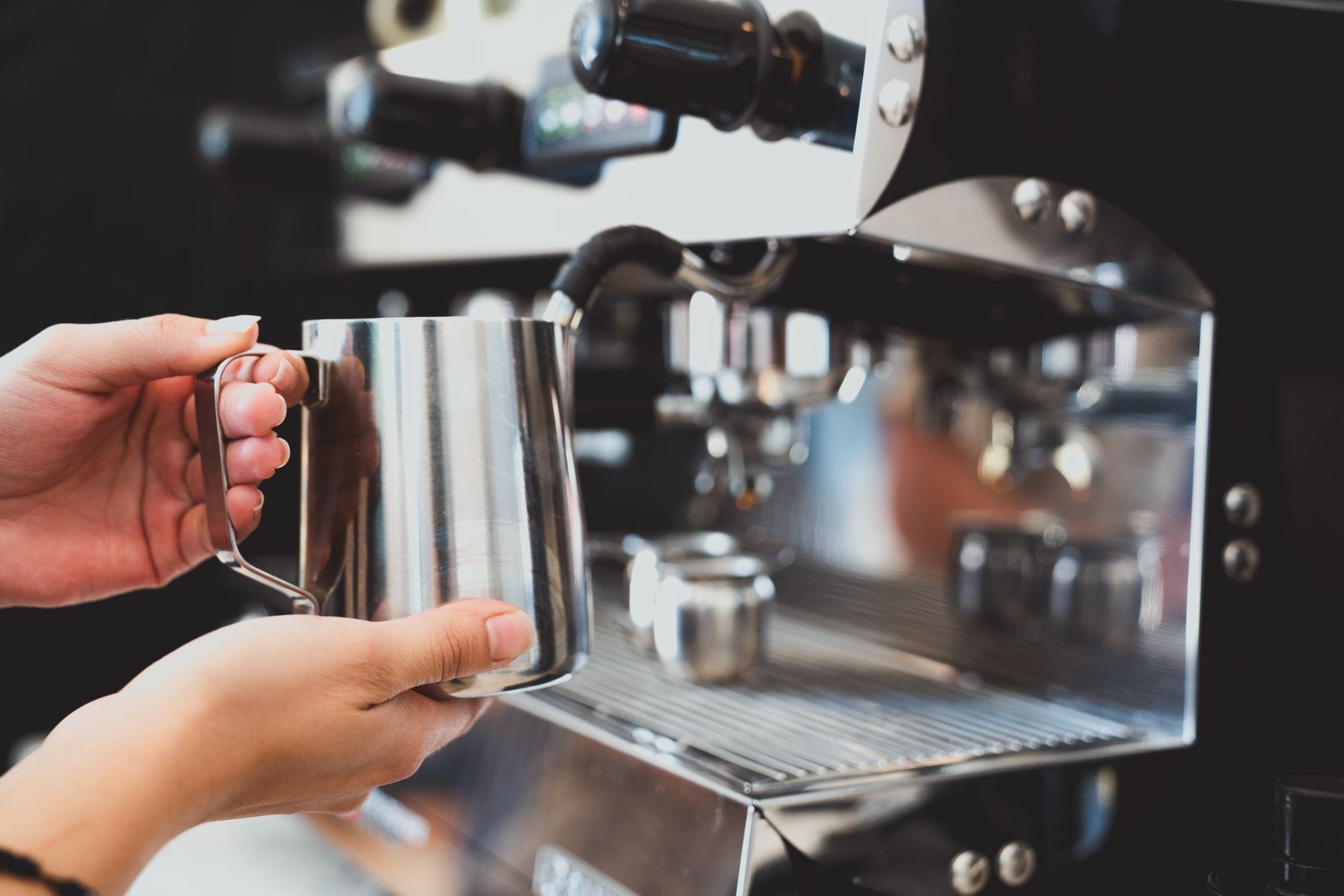
Convenience does not remove the need for maintenance. After a milk drink, the machine asks you to rinse the milk circuit. Angelo places a small cup underneath to catch the rinse water so the tray does not fill unnecessarily. If you want to press a button and never think about cleanup, this recurring step matters.
Cleaning and trade-offs to know before buying
A bean-to-cup machine collects used coffee grounds and rinse water, so its containers need regular emptying and cleaning. The Rivelia menu also guides users through rinsing, descaling and water-filter settings. Following those prompts and the manufacturer’s instructions is part of using the machine, not an occasional exception.
Angelo’s main positives are convenience, a broad drink menu, user profiles and the ability to switch between beans. The downsides he highlights include limited grinder adjustment and extra waste when he wants to dose pre-portioned specialty coffee precisely. He also finds that the coffee-profile feature stores a recipe without helping him improve it based on tasting.
Is it an upgrade from capsules?
It can be if you want to explore more drinks, try different beans and reduce the hands-on steps involved in making each cup. It is less suited to you if your priority is fine-tuning every extraction or getting as much control as possible over specialty coffee. And it is not maintenance-free: time saved while brewing comes with rinsing and cleaning.
Before deciding, ask yourself what bothers you more: the limited choice of capsules, or managing beans, grounds and cleaning cycles. If you can, taste a drink made with the coffee you normally buy and judge the cup, not just the feature list. The practical takeaway is simple: choose a superautomatic for convenience and variety, not because the label guarantees better espresso.
On Patreon this week
For a deeper look at the questions after Angelo’s Rivelia review, he has published a post about pods, capsules and whole beans. Read the post on Patreon.
You can also explore Caffinity Premium, join the free chat on Discord and subscribe to Angelo’s YouTube channel.
Read next

Coffee grinder for espresso, moka and filter: what to look for
Manual or electric, ceramic or steel, stepped or stepless: Angelo’s video compares grinders and shows what to consider for your brewing method and daily routine.
Coffee deals on Telegram: we're sharing them on Amanti del Caffè
After our community poll, we’ll share Amazon offers on coffee machines, grinders and accessories on Amanti del Caffè on Telegram, ahead of Black Friday.

Lelit Anita review: how it compares with the Gaggia Classic Pro and Pavoni
An integrated grinder, a separate setup or a manual lever: Angelo compares the Anita, Classic Pro and Europiccola, and explains what his test can and can’t tell you.