
Watery Espresso: What Causes It and How to Fix It
Watery espresso is not fixed by chasing shot time. Learn how to check dose, yield, grind size, and puck preparation, changing one variable at a time.

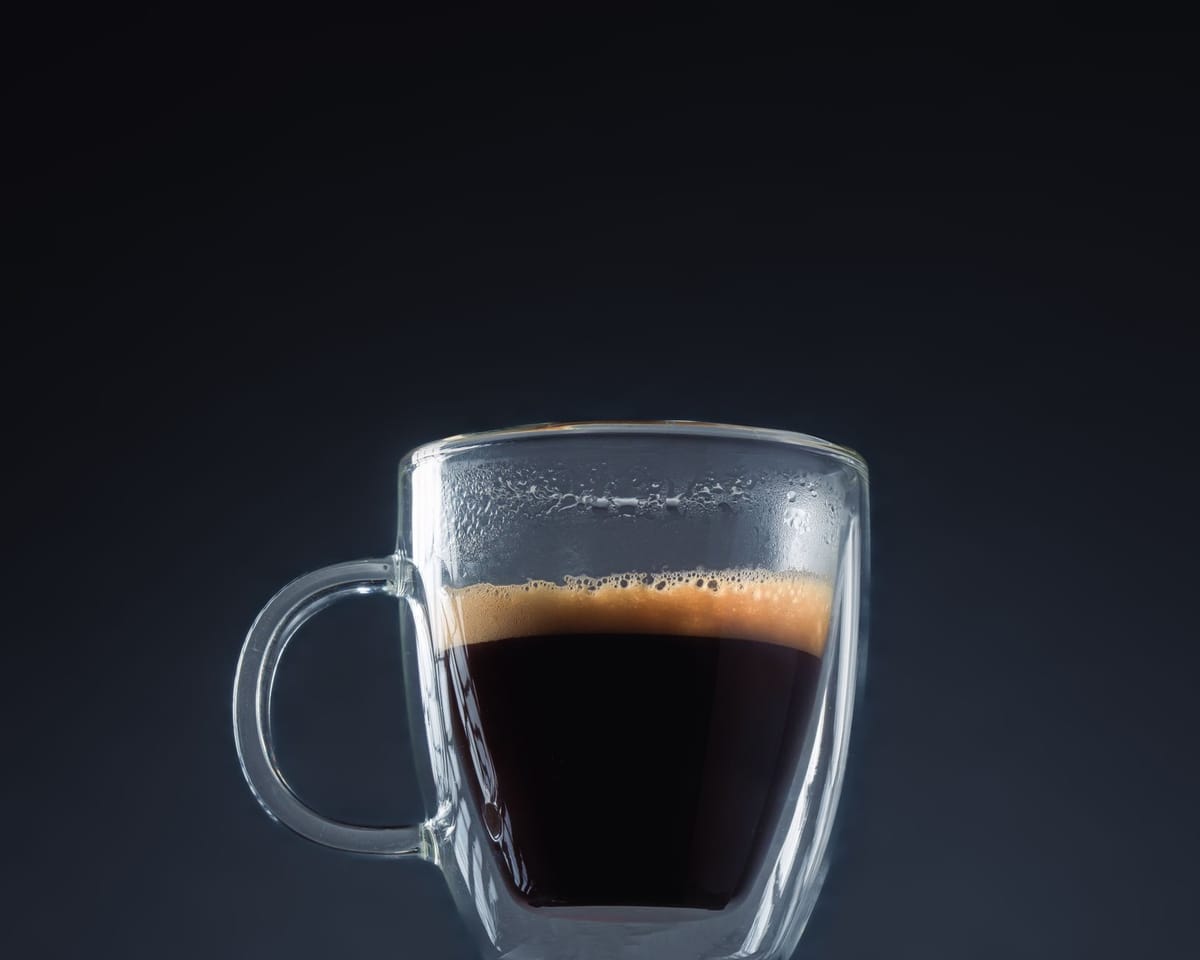
Watery espresso usually comes from too much water for the dose, coffee that offers too little resistance, or uneven extraction. Weigh the dose and drink, then change one variable at a time to find the cause instead of chasing shot time.
This is a practical diagnosis: change one variable at a time, taste, and write down the result. It is the quickest way to stop making random adjustments. The technical guidance has been checked against the sources listed at the end of the article.
First question: is it actually watery?
“Watery” can describe different problems: low intensity, light body, or a shot that tastes both weak and unpleasant. They are not synonyms and do not always call for the same fix. Strength in the cup and extraction level are two separate things, and you need to assess them separately.
One misleading indicator is crema. It is made largely of carbon dioxide, fine particles, and oils, and does not tell you much about extraction quality. A thin crema, by itself, is not a defect to correct. If the shot tastes good, there is no problem.
If the espresso is light but clean and pleasant, you may simply prefer a more concentrated drink. If it tastes hollow, sour, or dry, the problem may also involve extraction uniformity, not just the amount of water.
Before adjusting the grinder, weigh the coffee going in and the drink in the cup. Without both measurements, you cannot tell whether you are making a short espresso or letting much more water run through than expected. The dose-to-yield ratio is the first parameter to set precisely. It comes before grind size, flow rate, and temperature.
Cause 1: too much beverage for the dose
This is the simplest cause to check. With the dose held constant, increasing the amount in the cup tends to reduce perceived concentration and can make the shot taste lighter.
The fix is not always to stop the shot earlier. First, record your current recipe. Weigh the dose in the portafilter, tare the cup, and weigh the output. Then gradually reduce the final beverage yield while keeping dose, distribution, and temperature unchanged, and compare the shots.
If the taste becomes more intense but also harsh, you have not necessarily solved everything. An issue with extraction uniformity or puck preparation may remain, but those are not the only possibilities: the coffee, its roast, the water, and the machine can also play a part. Check rather than assume.
Cause 2: the flow meets too little resistance
A grind that is too coarse, a dose that does not suit the basket, or a coffee that behaves very differently from the one you used to dial in the grinder can let water flow too easily. The cup fills quickly and the espresso may taste weak.
Try this: keep the dose and the amount in the cup the same, then make the grind slightly finer. Purge the small amount of coffee left in the grinder after adjusting it, prepare another espresso, and taste.
Do not use time as your only verdict. It is a useful indicator of whether something changed, but two shots with a similar duration can taste different if water moved through the puck differently. What ends up in the cup depends mainly on flow rate and how evenly the water passes through the coffee, not on the seconds shown by the stopwatch.
Cause 3: channeling and uneven puck preparation
If some parts of the puck are denser than others, water tends to find the easier paths. It flows through some of the coffee too much and other parts too little. The cup can taste hollow, sour, and dry at the same time.
Check your technique before buying accessories. Distribute the grounds evenly, level the bed with a few light vertical taps, tamp level, and lock in the portafilter without knocking it. If you use a needle tool, it should break up clumps without digging trenches or pushing all the coffee toward the edges. Finer needles are better than thick ones.
Also look at consistency from shot to shot. If one cup tastes good and the next is watery with the same recipe, pay more attention to puck preparation, grinder retention, or machine stability than to the recipe itself.
Cause 4: coffee and equipment are not neutral
How the coffee behaves changes with origin, roast, age, and storage conditions. A setting that worked with one bag may not work with the next. A hot, dirty, or inconsistent grinder can also change the flow.
Clean the basket, shower screen, and portafilter regularly: the basket every day and the shower screen at least once a week. Check that the basket suits the dose you want to use. Store coffee in an airtight container, away from oxygen, moisture, and heat. Protecting it from light is common-sense advice found in many guides, but the sources I could verify identify oxygen, moisture, temperature, and time as the main factors. Old residue and oils do not just make the taste less clean. They also make diagnosis harder.
If your machine lets you adjust pressure or temperature, do not change either while you are still checking dose, yield, grind size, and distribution. Adding variables makes it impossible to tell which adjustment worked.
A simple sequence for fixing it
- Weigh: record the dose and the final amount in the cup.
- Taste: note whether intensity, sweetness, body, or balance is missing.
- Check the flow: look for an uneven start, side jets, or big differences between shots.
- Change one thing: adjust the amount in the cup first, then the grind. Only after that, consider dose and other parameters.
- Repeat: make the recipe you liked again. One good espresso is not yet a reliable recipe.
Here is the practical advice: do not start by asking what the “right” shot time is. Start with how much coffee you use, how much espresso you get, and what you taste in the cup. Measure those three things and adjust one variable at a time. Then watery espresso stops being a mystery.
Join the Caffinity community
Caffinity members get exclusive discounts from specialty coffee roasters. Join the free Caffinity chat on Discord to compare notes with other coffee enthusiasts, explore Caffinity on Patreon, and follow Angelo as he tastes and breaks down coffee on camera each week: subscribe to his YouTube channel.
Sources
Every technical point in this article has been checked against the sources below. Where common practice is not supported by a published measurement, the text says so instead of treating it as fact.
Standards and research
- Specialty Coffee Association, Towards a New Brewing Chart, 25 Magazine, Issue 13: strength and extraction level as separate axes.
- Specialty Coffee Association, Preserving Freshness: A Race Against Time and What is the Shelf Life of Roasted Coffee?: oxygen, moisture, temperature, and time in coffee degradation.
- M. I. Cameron et al., Systematically Improving Espresso: Insights from Mathematical Modeling and Experiment, Matter (Cell Press), 2020 (DOI: 10.1016/j.matt.2019.12.019): flow through the puck is not uniform, which is the source of poor repeatability.
- B. K. L. Schmieder and V. B. Pannusch, Influence of Flow Rate, Particle Size, and Temperature on Espresso Extraction Kinetics, Foods (MDPI), 2023: extraction ratio is the first parameter to set, and flow rate matters more than any other factor.
- G. Angeloni et al., Test of an innovative method to prepare coffee powder puck, improving espresso extraction reliability, European Food Research and Technology (Springer), 2021.
- A. Illy and R. Viani (eds.), Espresso Coffee: The Science of Quality, Elsevier (paid).
Practical guides
- James Hoffmann, Understanding Espresso series (dose, ratio, time, grind size, temperature, pressure), as well as A Beginner’s Guide To Fixing Bad Espresso, The Beginner’s Guide to Coffee Machine Maintenance, and How I Dial-In Espresso.
- Barista Hustle, Espresso Recipes: Time, Understanding Yield, and Weiss Distribution Technique.
- Scott Rao, The twin myths of “easier to extract” and “overextraction” and Crema is rubbish, 2026 edition.
- Perfect Daily Grind, A guide to calibrating your espresso recipes.
- Jonathan Gagné (Coffee ad Astra), The Mechanism Behind Astringency in Coffee.
Puck preparation and storage
- Stéphane Ribes (Decent Espresso), Which puck preparation technique is best?: measured comparison of preparation techniques, including fine needles and light vertical taps.
- Yker Valerio (Barista Magazine), Grind Retention: Why Is It Important?
- Monika Fekete (BeanScene), How grind temperature impacts extraction.
Read next
Coffee grinder for espresso, moka and filter: what to look for
Manual or electric, ceramic or steel, stepped or stepless: Angelo’s video compares grinders and shows what to consider for your brewing method and daily routine.
Coffee deals on Telegram: we're sharing them on Amanti del Caffè
After our community poll, we’ll share Amazon offers on coffee machines, grinders and accessories on Amanti del Caffè on Telegram, ahead of Black Friday.
Lelit Anita review: how it compares with the Gaggia Classic Pro and Pavoni
An integrated grinder, a separate setup or a manual lever: Angelo compares the Anita, Classic Pro and Europiccola, and explains what his test can and can’t tell you.