
Ninja Barista Assist Review: Espresso, Milk and Grinder
Angelo tests the Ninja Barista Assist for the first time, from its built-in grinder and espresso guidance to milk frothing. See what worked, what did not, and who may find it useful.

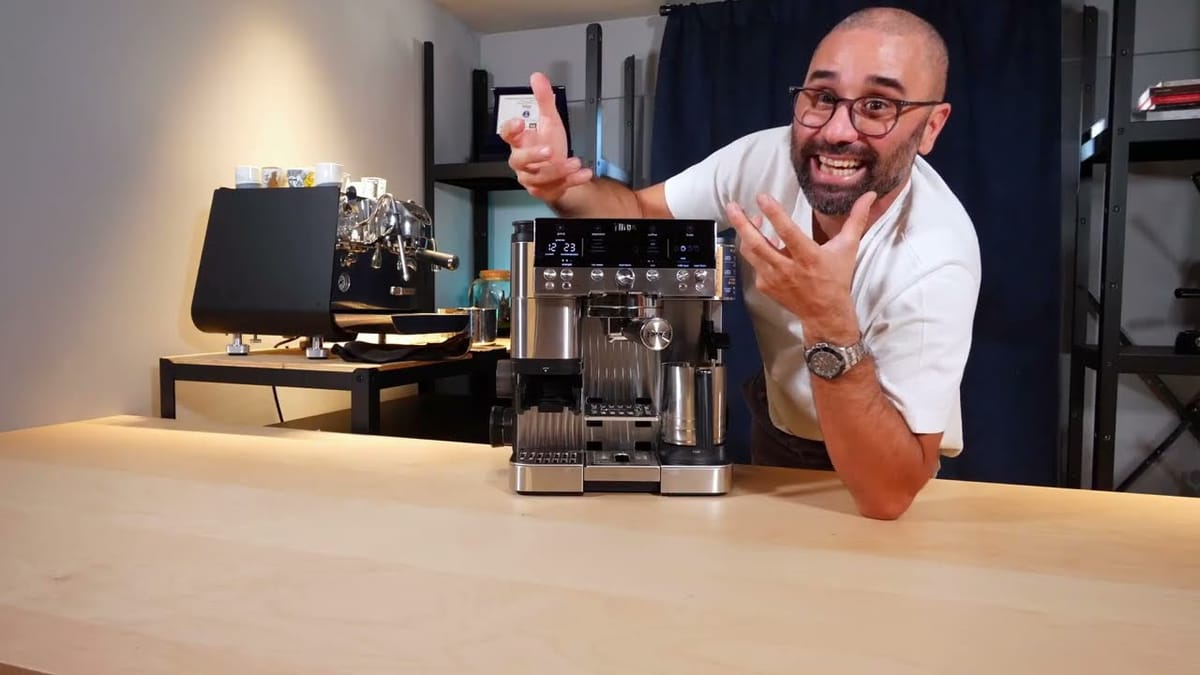
The Ninja Barista Assist guides grind adjustments with its built-in grinder, making a first espresso setup more approachable. In Angelo’s initial test, he liked the milk texture but noted slow frothing and questions that need longer use.
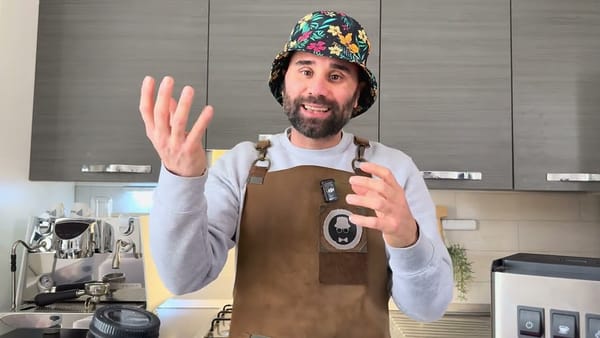
In the video below, Angelo explains what he tried and what seemed genuinely useful. It is in Italian: to enable English subtitles on YouTube, choose CC, then Settings, Subtitles, Auto-translate, and English.
The grinder and brew guidance
The machine has a built-in grinder with 39 mm metal conical burrs and 25 grind settings. Angelo thinks 25 steps may be too few based on his experience with professional equipment, but gives it a chance before judging. He also likes that the bean hopper can be removed, making it easier to empty and clean.
The display shows the current grind setting and a recommended one. At startup, Angelo sees 12 as the current setting and 9 as the recommendation; after brewing, the machine guides him toward a finer or coarser grind. He interprets the guidance as a reading of the extraction and water flow, but says he still needs to understand the logic better. The menu includes espresso, espresso quad, Americano, cold brew, classic coffee, rich, and over ice. In this first test, he does not explain or fully verify every mode.
He finds the portafilter unusually shaped and heavy at the front, and the tamper shape feels odd to him as well. These are personal impressions from a barista used to professional machines, not a fault in operation demonstrated in the video.
Espresso: results and adjustments
For the test, Angelo uses a commercial blend of 80% Arabica and 20% Robusta. The machine recognizes the double basket, starts with pre-infusion, and suggests grind adjustments after brewing. The first shot runs very quickly; after he makes the grind finer, the next extraction slows down. Angelo does not call it a perfect espresso, but says the shots he considers successful based on the recommended grind were not bad at all in the cup. He also misses having a visible shot timer.
The crema looks thin and fades quickly. When he checks the bag, Angelo realizes the coffee is old and takes responsibility for the result: he forgot to check the date. His practical advice is simple: check how fresh the coffee is before blaming the machine for disappointing crema.
He also tests the strength control. Angelo understands it as a way to change the amount of water in the cup: a higher strength setting makes a shorter, more concentrated drink, while a lower setting makes a longer espresso. In the video, he presents this as his understanding during the first use, not as a precise measurement of extraction ratios.
Milk: results and time
Angelo selects cow's milk and the maximum froth setting. The machine takes a long time, which he notices immediately, but he likes the result: the milk is creamy and a little airy. He even pours a small heart. For a first try, he says it is not bad at all, while pointing out how long he had to wait.
The machine also offers a milk-type setting and a purge function. Angelo remembers to purge the wand, but is still learning the controls and sequence during this first test. It is a useful look at the result, not a complete assessment of speed and convenience after weeks of use. If you use a steam wand, our guide explains how to steam milk for a cappuccino.
What Angelo likes, and what remains unclear
The feature he values most is the step-by-step guidance. For someone who has never used an espresso machine or grinder, a suggested grind setting can make the first steps less intimidating. He also likes being able to remove the bean hopper. The milk came out well, although frothing felt slow.
His reservations include the 25 grind steps, the portafilter that feels strange in his hand, and the lack of a visible extraction time. The machine's appearance is not to his personal taste either. In the video, he says he bought it on sale for €351 and saw it at €499 when he checked again. Those are the prices he reported in that video, not a current price quote.
Who might find it useful
Angelo's first impression is positive mainly for people starting from scratch who want a machine with a built-in grinder and some guidance. He sees it as a possible first step for someone who does not know where to begin, but this video is not yet a final judgment on long-term performance. Angelo says he plans to revisit the machine after 30 days to decide how much he has enjoyed using it and whether he would recommend it.
If you are considering one, judge it with fresh coffee and the drink you make most often. Look at taste, preparation time, ease of adjustment, and cleanup together: features matter when they help your everyday routine.
Join the Caffinity community
Caffinity members can find exclusive offers from specialty coffee roasters, join the free Discord chat, and support the project on Patreon. Follow Angelo on YouTube for weekly coffee tastings and practical videos. The Patreon post also has an English version at the bottom: read the post on Patreon. Join Caffinity on Discord, discover Patreon, or subscribe to Angelo's YouTube channel.
Read next
Coffee grinder for espresso, moka and filter: what to look for
Manual or electric, ceramic or steel, stepped or stepless: Angelo’s video compares grinders and shows what to consider for your brewing method and daily routine.
Coffee deals on Telegram: we're sharing them on Amanti del Caffè
After our community poll, we’ll share Amazon offers on coffee machines, grinders and accessories on Amanti del Caffè on Telegram, ahead of Black Friday.
Lelit Anita review: how it compares with the Gaggia Classic Pro and Pavoni
An integrated grinder, a separate setup or a manual lever: Angelo compares the Anita, Classic Pro and Europiccola, and explains what his test can and can’t tell you.