
Ninja Luxe Cafe review: espresso and grinder after a month
Angelo revisits the Ninja after a month: he likes its specialty espresso and Long Black, but finds limits in the grinder.

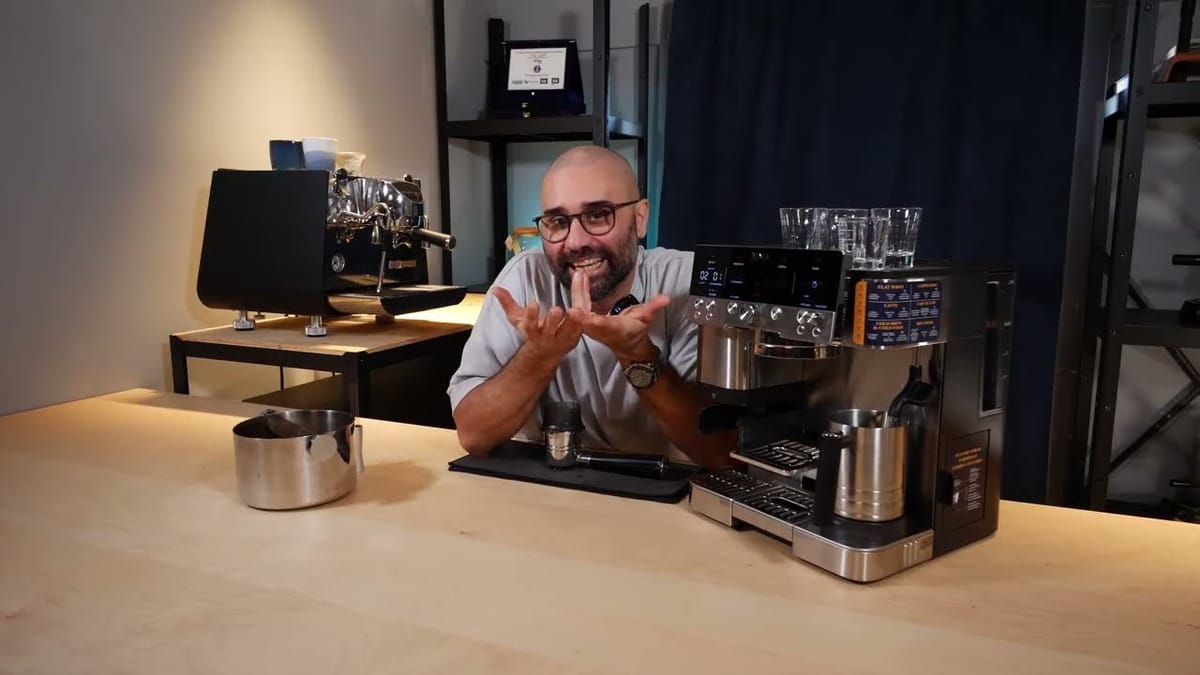
In this Ninja Luxe Cafe review, Angelo shares what he found after a month: he likes the specialty espresso and Long Black, but the grinder still frustrates him. The video is in Italian. For English subtitles, turn on CC, then choose Settings, Subtitles, Auto-translate, English on YouTube.
How does the Ninja handle specialty espresso?
Angelo likes the espresso, even when the extraction looks untidy. After using darker commercial coffee in his first test, he switches to a light-roasted Ethiopian specialty coffee and brews a longer shot.
For those beans, he settles on grind setting 2 and the lowest Strength setting. He wants to bring out the flavours and is happy to give up some body. Those settings worked for that test; they are not a recipe for every coffee.
He picks up fragrance, acidity and sweetness, with more body than he expected. The crema is thin. He likes the espresso he made with those beans.
Compare this follow-up with Angelo's first Ninja Barista Assist test. After a month, he has had time to figure out which recommendations he follows and what he prefers to adjust himself.
What does the Strength setting change?
In Angelo's demonstration, Strength controls shot length on the espresso side and coffee dose on the Coffee side. At first, he found the shared name confusing.
For espresso, a higher Strength setting means less water passes through the coffee, making the drink more concentrated. He raises Strength for the Long Black, which adds hot water. The machine dispenses the water first, then brews the espresso onto it.
This is one of his favourite drinks in the test. He tastes orange, peach and yellow-fruit sweetness, with less body than the espresso. Those are his impressions of the beans he used; the machine cannot promise those flavours.
On the Coffee side, Strength changes the dose of ground coffee, while the cup-size options control the drink volume. Once he spent time with one drink mode, the controls made more sense as he tried the rest of the menu.
Are Coffee and the cold drinks worth using?
Angelo likes the Coffee drink. The room-temperature modes interest him less, and he does not see himself using all of them day to day.
For Coffee, he switches to a very light-roasted Colombian natural Geisha, selects Rich and Small Plus, and leaves the grounds untamped. He also notices aromas from the previous coffee: he had not purged the grinder after changing beans. He likes the cup, though it contains an accidental mix of two coffees.
Cold Espresso and Cold Brew use room-temperature water, with pauses during brewing. Angelo offers one possible explanation for how the pauses affect extraction, but the video has no measurements of what happens in the coffee bed.
The Cold Espresso tastes delicate, with a velvety body, though Angelo finds it less interesting than the earlier drinks. His Cold Brew is very acidic with the settings he chose. He considers trying a stronger concentrate to dilute, but has not tested that idea in this demonstration.
What are the built-in grinder's drawbacks?
Angelo would most like to improve the grinder. It affects the cup, and his machine also behaves awkwardly. After a month, he is less inclined to follow every Barista Assist recommendation.
With the portafilter inserted, he shows a short automatic purge when he adjusts finer. He thinks it is too small, and demonstrates grinding a little more by holding Grind. The Coffee tasting shows why old grounds matter: some of the previous beans end up in the next drink.
At coarser settings, the adjustment dial moves during grinding and the displayed number rises. Angelo holds the dial in place by hand. That is what happened with his test unit; the video does not show whether every unit or other Ninja version behaves the same way.
If you are comparing an integrated machine with a separate setup, the home espresso machine guide can help you weigh up budget, the drinks you make every day and space for a grinder.
Who would the Ninja Luxe suit?
Angelo sees it as a compact, approachable option for someone getting started. If you already want more room to adjust and explore different flavours, think about how much room to grow you need.
He says he paid around €350 on offer and mentions €499 as a reference price. Those are figures from the video, not a current price check. He enjoys using the machine and likes the drinks it makes with good beans, though he finds the grinder limited.
The final quad shot is a first attempt: the cup overflows, and Angelo says it needs more testing. His month of making espresso and Long Black gives you more to go on than that one experiment.
If you already own one, pick a drink you make often and note the beans, grind setting and Strength. Change one setting at a time and taste what happens before working through every option on the display.
On Patreon this week
For Premium members, Angelo wrote a follow-up on this topic, in Italian and English: Ninja Luxe: Doses and a mixed-coffee tasting. The opening is free to read.
Join the Caffinity community
Caffinity brings together people making specialty coffee at home. Members get partner-roaster discounts and can compare notes in the free Discord chat. Caffinity Premium on Patreon includes extra content, behind-the-scenes video material, enhanced partner discounts and private Discord channels.
For future tests, subscribe to Angelo's YouTube channel. The videos are in Italian; YouTube can translate the subtitles into English automatically.
Looking for your next bag? Try the Caffinity coffee quiz.
Read next

Coffee grinder for espresso, moka and filter: what to look for
Manual or electric, ceramic or steel, stepped or stepless: Angelo’s video compares grinders and shows what to consider for your brewing method and daily routine.
Coffee deals on Telegram: we're sharing them on Amanti del Caffè
After our community poll, we’ll share Amazon offers on coffee machines, grinders and accessories on Amanti del Caffè on Telegram, ahead of Black Friday.

Lelit Anita review: how it compares with the Gaggia Classic Pro and Pavoni
An integrated grinder, a separate setup or a manual lever: Angelo compares the Anita, Classic Pro and Europiccola, and explains what his test can and can’t tell you.