
Cecotec coffee machine review: Cremmaet Latte Art tested
Easy drinks, limited adjustment and water before the coffee: what Angelo's Cremmaet Latte Art test shows, without turning one review into a long-term verdict.

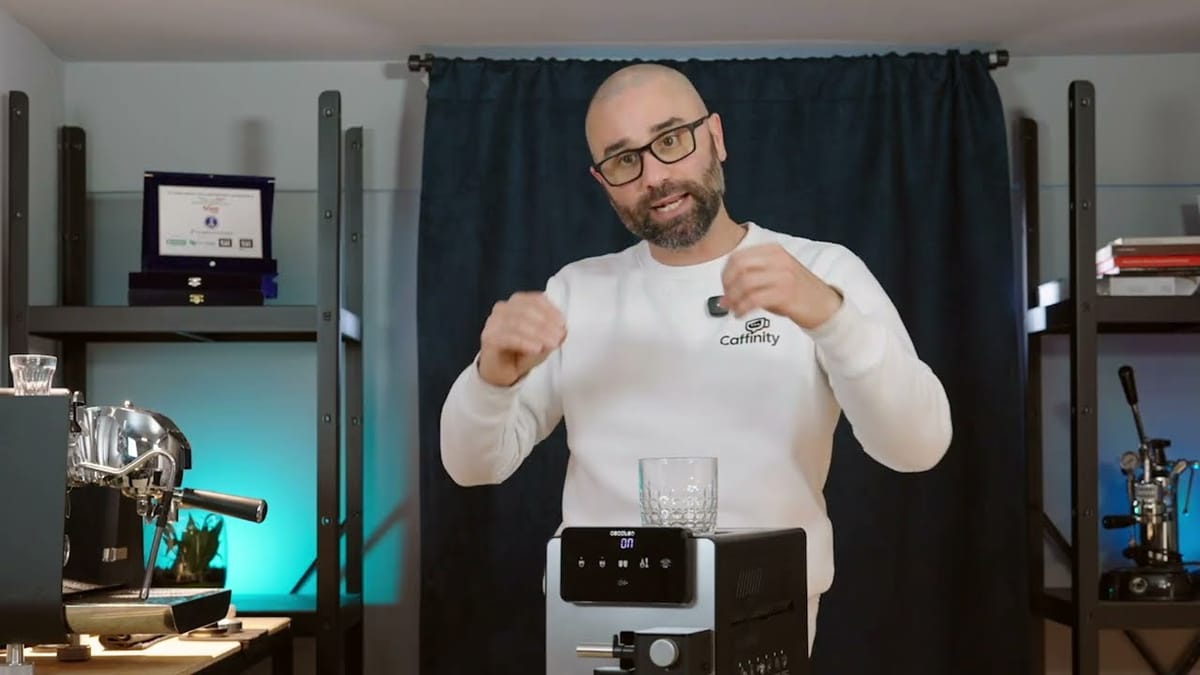
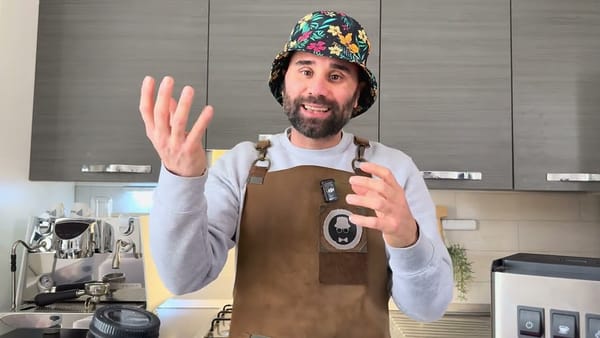
This Cecotec coffee machine review finds straightforward drinks but limited room to adjust espresso: Angelo improves the cup, then reaches the grinder and dose limits. His video tests the machine presented as the Cremmaet Latte Art; it is in Italian, with English subtitles accessible on YouTube through CC, Settings, Subtitles, Auto-translate, English.
How do you use this Cecotec coffee machine?
The tested machine handles the journey from beans to cup automatically, while you select a drink and choose among the available settings. Angelo opens the machine to explain the basic sequence: grinding, filling the brewing group, compressing the grounds, brewing and dropping the used coffee into the waste container.
The useful question is not simply whether it makes coffee when you press a button. It is what you can change when that coffee does not taste right. During the test, Angelo adjusts the displayed dose, drink volume and temperature. The grinder has five positions. Those controls offer some flexibility, but not the same freedom as a separate grinder and manual espresso machine.
This review concerns the unit shown in the video published on June 2, 2026. It does not establish the specifications of every Cecotec automatic machine. Check the exact model before assuming that another version offers the same controls or behaves in the same way.
What does the Cecotec espresso taste like?
The cup improves during the test, but Angelo soon runs out of adjustment range. He uses a blend containing 70% arabica and 30% robusta. After an initial tasting, he selects 85 °C, a displayed dose of 12 g and a drink volume of roughly 35 ml.
There is plenty of crema, yet he finds the body lacking. For the next attempt, he raises the temperature setting to 90 °C and stops the drink at around 30 ml. He reports more body when tasting it. These are settings and impressions from this particular test, not a universal recipe or a measurement of the actual water temperature at the coffee.
Two variables change together, so this demonstration cannot tell us how much of the perceived improvement came from each adjustment. At home, change one variable at a time if you want a clearer comparison. Our guide to common espresso mistakes explains why keeping track of adjustments matters more than chasing a single number.
Angelo would then like to grind finer, but the grinder is already at its finest position. The selected dose is also at the maximum available during the test. That is the practical limit: you can alter the drink, but you cannot keep adding dose or making the grind finer indefinitely. A thick layer of crema does not remove that limitation.
How does it handle cappuccino and milk?
The froth setting visibly changes the result, so the first cappuccino is not the whole story. Angelo initially starts without setting the milk-frothing dial as intended and gets little foam. He repeats the preparation with a higher froth setting and shows a denser layer.
In that second attempt, he also calls up a 12 g coffee dose and a 30 ml drink volume. The footage is useful for seeing the automatic sequence and the effect of the froth control. It is not a controlled comparison between different milks, nor a test of consistency over extended use.
One feature Angelo likes is the short drink menu: coffee, americano, cappuccino and milk. He prefers a few understandable options to a long list of recipes. If you want an everyday milk drink without operating a steam wand, that simplicity may matter more than the number of menu entries.
What are the main limitations?
The clearest drawbacks are the narrow grinder adjustment range and the water that enters the cup before the coffee. Angelo repeatedly moves the cup away to avoid collecting that water, then returns it for the espresso. It is a small extra action, but it undermines the idea of completely hands-off preparation.
In the comments, a viewer suggests placing the cup under the spouts only after the water has come out. Angelo agrees that this works, while still finding it inconvenient. Asked whether he managed to eliminate the water release, he says he did not. That does not prove every Cecotec model behaves identically, or establish the precise purpose of the release.
- Five grinder positions: the finest setting leaves no further adjustment in this test.
- A dose ceiling: Angelo cannot increase the selected amount any further.
- Temperature changes in 5 °C steps: he appreciates having the control but considers the intervals large.
- Unanswered ownership questions: this demonstration does not establish durability, reliability or repair costs.
Is it a sensible alternative to capsules?
It may suit someone who wants simple bean-to-cup drinks and accepts limited adjustment, rather than someone seeking extensive control. Angelo says he bought the machine for €210 and mentions roughly €230 as a usual price at the time of recording. Those are historical references, not current prices.
Any saving depends on what you pay for capsules and beans, how much coffee you use and the costs of upkeep. The video's payback estimate is not a guarantee for every household. For the broader decision, see our comparison of bean-to-cup machines and capsules.
Decide how much involvement you actually want before choosing. If you value a short menu and a mostly automatic routine, the demonstration gives you useful evidence. If you want to explore grind and recipe adjustments in depth, do not buy it expecting controls that the test shows are already at their limits.
Join the Caffinity community
Compare experiences in the free Caffinity Discord community. Caffinity Premium on Patreon includes extra content, enhanced discounts with partner specialty roasters and private Discord channels.
For more equipment tests and coffee tastings, subscribe to Angelo's YouTube channel. The original video is embedded above.
Read next
Coffee grinder for espresso, moka and filter: what to look for
Manual or electric, ceramic or steel, stepped or stepless: Angelo’s video compares grinders and shows what to consider for your brewing method and daily routine.
Coffee deals on Telegram: we're sharing them on Amanti del Caffè
After our community poll, we’ll share Amazon offers on coffee machines, grinders and accessories on Amanti del Caffè on Telegram, ahead of Black Friday.
Lelit Anita review: how it compares with the Gaggia Classic Pro and Pavoni
An integrated grinder, a separate setup or a manual lever: Angelo compares the Anita, Classic Pro and Europiccola, and explains what his test can and can’t tell you.